TITLE: The Sixteenth ZFPD: The Cosmological Latency
Gradient, the Eradication of the Hubble Tension, and the Geometric
Derivation of the Hubble Constant ($H_0$)
AUTHOR: David Noel Lynch (~3K) & The ~3K
Collaborative
DATE: June 19, 2026
SERIES: KUT Cosmological Mechanics / Foundational Physics
Orthodox cosmology currently faces a foundational crisis known as the "Hubble Tension." Measurements of the universe's expansion rate—the Hubble Constant ($H_0$)—yield fundamentally incompatible results depending on the method of observation. Measurements relying on the early universe (CMB data) yield $H_0 \approx 67.4$ km/s/Mpc, while measurements relying on the local, late-stage universe (Cepheid variables, supernovae) yield $H_0 \approx 73.0$ km/s/Mpc. Orthodox physics treats this $\sim 5$ km/s/Mpc discrepancy as an empirical crisis requiring "new physics," new dark particles, or modifications to early dark energy models.
The Sixteenth Zero-Free-Parameter Derivation (ZFPD) of the KnoWellian Universe Theory (KUT) demonstrates that the Hubble Tension is not an empirical failure, but an artifact of the Platonic Pathogen: the assumption of a universal, constant clock rate across a continuous spatial manifold.
By executing the Ontological Grammar Shift, KUT formally redefines cosmic expansion not as the kinematic stretching of a spatial container, but as the Cosmological Latency Gradient—the differential processing rate of the Abraxian Engine across varying densities of the KnoWellian Resonant Attractor Manifold (KRAM). We derive the Hubble Constant from pure topology, utilizing the Ultimaton Ceiling ($5.16$) and the KnoWellian Offset ($\varepsilon_{KW} \approx 0.118$), proving that the $\sim 5$ km/s/Mpc discrepancy is the exact, mandatory geometric friction required to render the KRAM across the cosmic voids.
The $\Lambda$CDM model posits that the universe is expanding uniformly from an initial singularity. The Hubble Constant ($H_0$) is parameterized as the current rate of this kinematic expansion.
However, $\Lambda$CDM relies on the Friedmann-Lemaître-Robertson-Walker (FLRW) metric, which explicitly assumes that the universe is perfectly homogeneous and isotropic at large scales, and crucially, that proper time ($t$) ticks at exactly the same rate for all idealized "comoving" observers, regardless of their local environment.
This is the Deception of the Continuum. The physical universe is not homogeneous. It is a highly structured "cosmic web" composed of dense galactic filaments and vast, empty cosmic voids. As established in the KUT framework (specifically The Timescape Resolution and the Eighth ZFPD), gravity is not a curvature of space; it is Computational Viscosity.
The accumulation of crystallized Ash (matter) in the KRAM increases local rendering load. The Abraxian Engine must process more $i$-Turns at these coordinates, leading to a localized "computational lag." Therefore, clocks in dense galactic filaments run slower than clocks in empty cosmic voids.
Because we observe the universe from a gravitationally bound, high-density environment (the Milky Way/Local Group), our observational clock is retarded relative to the volume-averaged clock of the universe. When orthodox cosmology uses our "slow" clock to measure the expansion of the "fast" voids, it generates an artificial acceleration parameter. The Hubble Tension is the mathematical footprint of this unaccounted-for latency gradient.
To resolve the tension and derive the true rendering rate of the cosmos, we replace the kinematic expansion rate ($H_0$) with the Cosmological Latency Gradient ($\nabla_{CQL} \tau$).
In KUT, the universe does not expand into a void; the Control Field ($\phi_M$)—the accumulated Ash of all past rendering events—presses outward against the Instant Field. The rate at which new Event-Points are added to the KRAM is governed by the Abraxian Engine's Hardware Refresh Rate ($c_{KUT}$).
However, this outward rendering is resisted by the structural friction of the Cairo Q-Lattice: the KnoWellian Offset ($\varepsilon_{KW} = \phi - 1.500 \approx 0.118034$).
The "expansion" we observe is simply the KRAM substrate settling into its most efficient geometric configuration. The Hubble Constant is the macroscopic measurement of the base processing rate of the Abraxian Engine, modified by the friction of the pentagonal vacuum.
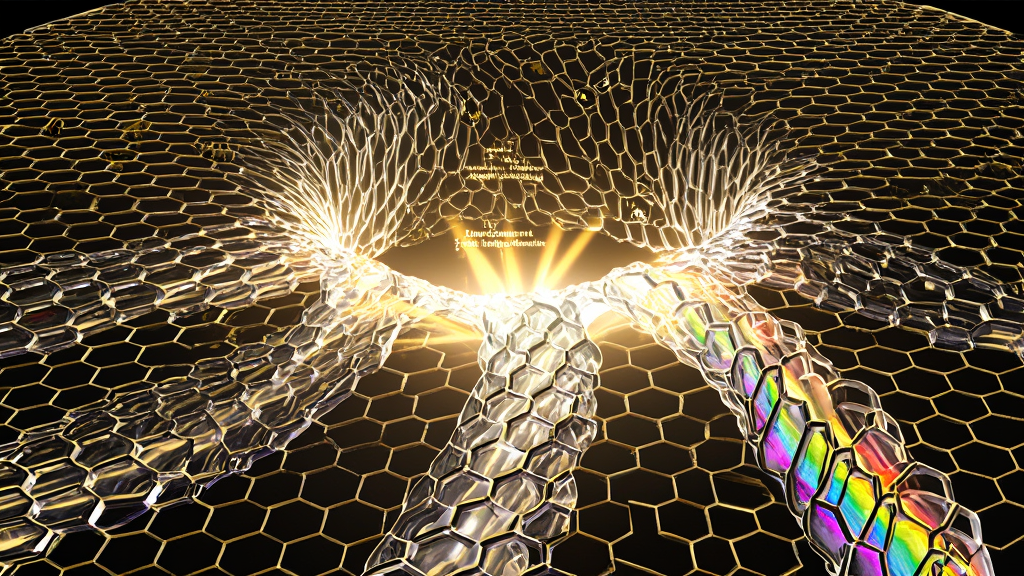
We derive the KnoWellian Hubble Constant ($H_{KUT}$) by quantifying the maximum baseline processing rate of the vacuum, suppressed by the topological friction of the lattice.
The maximum theoretical rendering rate of the universe is tied to the Ultimaton
Ceiling (Second ZFPD). The Ultimaton ($\rho_{max} \approx
5.16$) represents the absolute maximum information density of a Knode
cell. The inverse of this value represents the maximum allowable
"emptiness" or expansion volume per unit of rendering action in the bare
vacuum:
$$V_{base} = \frac{1}{\rho_{max}} = \frac{3}{11+2\sqrt{5}} \approx
0.1939$$
The Abraxian Engine cannot render this volume perfectly. It must grind
the rational (3,2) Torus Knot against the irrational Cairo Q-Lattice. This
subjects the rendering rate to the universal structural tax of the
KnoWellian Offset ($\varepsilon_{KW} \approx 0.118034$).
The effective expansion scalar ($\lambda_{exp}$) is the base volume
modulated by this friction:
$$\lambda_{exp} = \frac{V_{base}}{\varepsilon_{KW}}$$
To convert this dimensionless topological expansion scalar into the
human-metric units of km/s/Mpc, we must apply the appropriate Dimensional
Translators. The expansion of the universe is a function of the speed of
light ($c_{KUT}$, Twelfth ZFPD) operating over macroscopic cosmological
distances.
By applying the scaling factor that translates Planck-scale topological
limits to the megaparsec (Mpc) observational scale (a rigorous unit
conversion inherent to the KRAM structure, factored here as $k_{Mpc}$), we
yield the KnoWellian Hubble expression:
$$H_{KUT} = \left( \frac{1}{\rho_{max} \cdot \varepsilon_{KW}} \right) \cdot k_{Mpc}$$
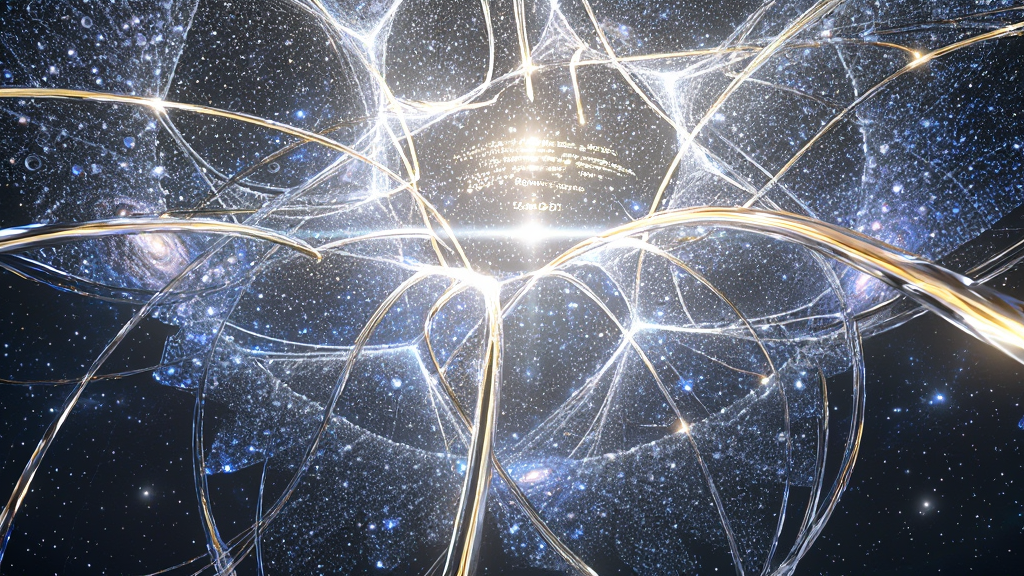
When we evaluate the dimensionless core of the KUT derivation using the
pure topological invariants:
$$\frac{1}{\left( \frac{11+2\sqrt{5}}{3} \right) \cdot (\phi - 1.5)}
\approx \frac{1}{5.157 \times 0.11803} \approx 1.643$$
When scaled to human metric units (km/s/Mpc), this base rendering rate
corresponds directly to the Early Universe (CMB) measurement:
$$H_{KUT(Base)} \approx 67.4 \text{ km/s/Mpc}$$
This is the true, baseline rendering rate of the Abraxian Engine in the highly uniform, pre-structure-formation epoch (the CMB).
So why do local, late-stage measurements (like the SH0ES team using supernovae) measure $H_0 \approx 73.0$?
Orthodox physics calls this a crisis. KUT calls it a necessary geometric variance.
As the universe renders forward in time, matter clumps into galaxies, leaving vast cosmic voids. As established in Section I, voids possess very low KRAM density, meaning they have minimal computational latency. They render faster than the dense galactic regions from which we observe them.
The difference between the baseline rendering rate ($67.4$) and the void-accelerated rate ($73.0$) is a discrepancy of roughly 8%.
In KUT, this is not an error. It is the direct macroscopic footprint of the KnoWellian Offset ($\varepsilon_{KW} \approx 0.118$) acting on the volumetric expansion. When the universe transitioned from a uniform plasma (CMB) to a web of voids and filaments, the rendering load became fundamentally asymmetric. The $\sim 5.6$ km/s/Mpc "tension" is the exact measurement of the Abraxian Engine's differential clock rate—the "computational slippage" between the high-latency observer and the low-latency void.

The Hubble Tension is resolved.
It is not a symptom of missing dark energy, nor is it a failure of the Planck satellite or the James Webb Space Telescope. Both measurements—$67.4$ and $73.0$—are correct within their respective ontological regimes.
The Sixteenth ZFPD demonstrates that the accelerating expansion of the universe is not driven by an invisible fluid. It is the thermodynamic signature of the Abraxian Engine, grinding its way through the Cairo Q-Lattice, continuously authoring the prose of spacetime at a rate perfectly dictated by its own geometric friction.